









Last Updated: 7 July 2026
How Bencb Would Go From $0 to $10K
Need a starting point? Let one of the world's best online tournament players help you go from $0 to $10,000.
Guides
Ben “Bencb” Rolle has made millions playing online poker. But remove the reputation, the bankroll, and the high-stakes environment, and one question becomes far more interesting:
If he had to start over from scratch, how would he rebuild?
No backing. No shortcuts. No protection from variance.
This guide is the answer.
Prefer a video? Watch Bencb’s full guide here:
💵 Bencb’s Poker Principles for Profitability
With 10 core principles, Bencb explains exactly how he would turn a small bankroll into $10,000
He sheds light on why most players fail long before they become profitable, and the mindset shifts required to survive in the poker world, plus many other gems.
#1 – Most Players Never Survive Variance
Most players understand how to manage variance, but emotionally, they panic after losses and move up too fast after wins.
Bencb explains, “Variance is the gap between what should happen in the long run and what actually happens in the short run.“
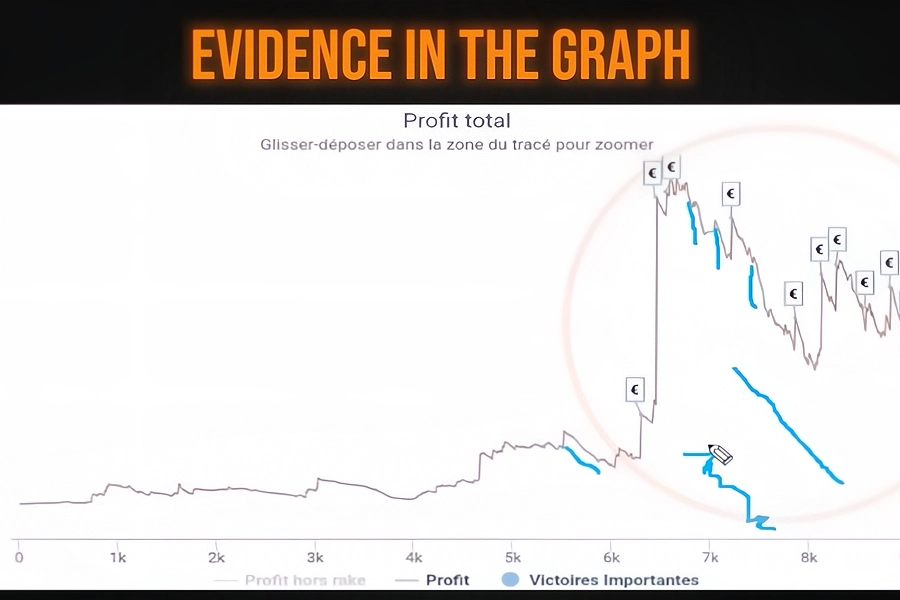
“Most players understand variance intellectually, but emotionally, they can’t handle it.
They move up too fast.
They overplay losing sessions, chase losses, abandon good strategies, and tilt their bankroll away. Not because they’re bad players, but because they don’t respect variance and they cannot handle their emotions.”
For Ben, bankroll management is survival.
“You want to follow a 100 buy-in bankroll management minimum. You have $100, you play $1 tournaments, period.
Do not move up if you have one big score. You likely got lucky.”
The players who survive are the ones emotionally prepared for downswings.
#1.2 – Learn to Think in EV
Most losing players think about outcomes. Winning players think about decision quality.
Bencb believes expected value is the single most important concept in poker, and life.
“Play poker and live your life by making as many plus-EV decisions as possible, and you will live a very good life.
Poker is not about winning this hand. It’s about making decisions that win money over thousands of hands.”
That mindset is harder than it sounds. Humans naturally react emotionally to short-term pain, and poker punishes that instinct constantly.
“Remember, I don’t need to win this pot. I just need this decision to be profitable. This is all that matters. And it’s the mindset most people struggle with and are never able to apply.“
Long-term winners stop chasing emotional rewards and start trusting math over mood.
#1.3 – Master the Math Behind Winning Poker
Pot odds and equity-based decision-making are the foundation of every profitable poker decision.
Without them, players guess. With them, players understand why money moves in one direction over time.
“Pot odds are the price you’re getting.
Odds are how often you hit.
Equity is how much of the pot is yours.
And if then price is good relative to your equity, you print money over the long term.
It is important you understand these fundamentals. You should be able to explain it to someone else.”
Ben compares these fundamentals to athletic movement mechanics.
“Everything becomes easier, smoother, and you learn much faster.
This also applies to downswings. They become less impactful.”
Strong fundamentals reduce chaos and accelerate every future stage of learning.
#2 – Stop Memorizing Ranges
Once the fundamentals are in place, Ben shifts focus toward pre-flop play.
But, he warns against blind memorization of ranges, without understanding the “why.”
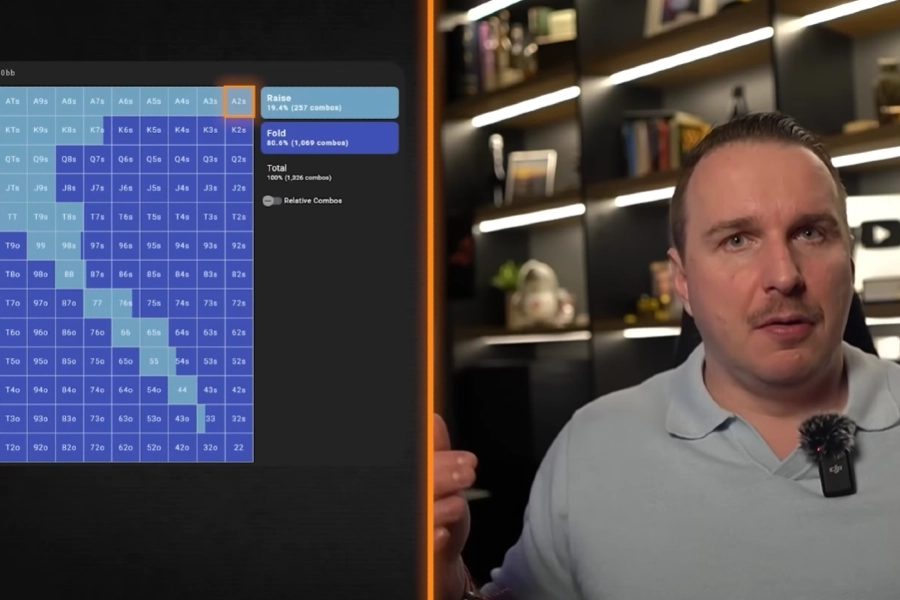
“Instead of memorizing ‘A2 suited is my bottom open-raising hand,’ ask yourself why.
Why can we not take Ace-3 offsuit or Ace-4 offsuit?
See, understand, apply.”
That sequence matters.
Players who blindly copy charts often collapse once games become dynamic. Players who understand why poker hand ranges exist can adapt under pressure.
Ben emphasizes active learning over passive consumption. Understanding always beats memorization in the long run.
#3 – Start Lower Than Your Ego Wants
After a few weeks of study, most players want action. Ben agrees, but not for the reason most people think.
Early sessions are not about making money. They are about building repetitions without emotional pressure.
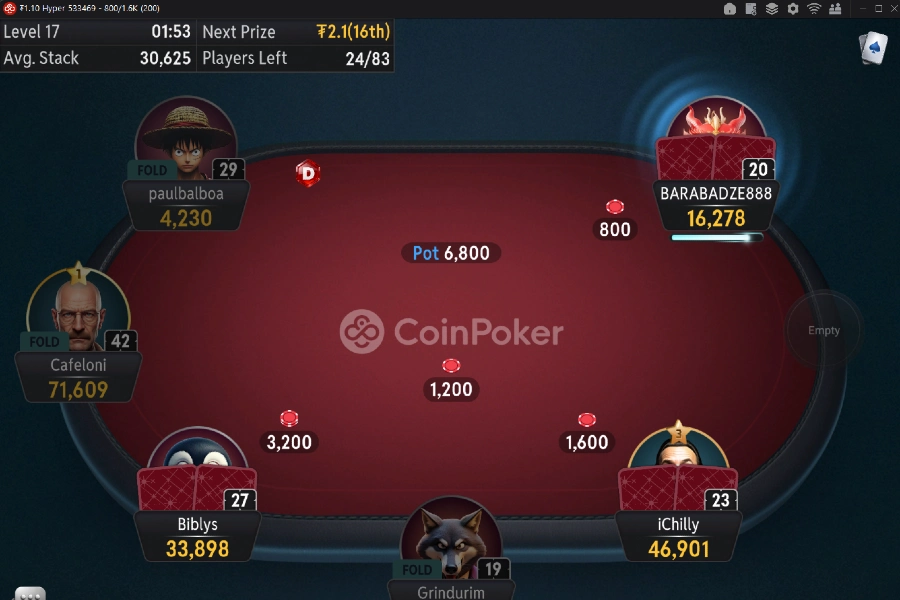
“Start as low as possible.
Even if you have a $500 bankroll, start with potato stakes.
If you want to hit a quick score, forget it. You’re gambling.”
At micro stakes, simplicity wins.
“Just play your value hands. Bet big.
Playing tight, playing your value hands well, and avoiding big bluffs is going to put you at the top at these stakes.”
Most beginners lose because they try to look advanced before mastering profitable basics.
#4 – Value Betting Is the Low-Stakes Cheat Code
According to Rolle, the biggest low-stakes leak is not bluffing too little. It is failing to extract enough value.
“Poker at micro and low stakes up until $50 is simply waiting for good hands and then hitting hard with big bets.
Don’t be afraid of value betting into better hands. It will happen.
Get over it.”
His c-betting strategy advice is equally direct.
“In general, c-bet a lot.
Micro and low-stakes players don’t raise enough for value and they don’t raise enough with draws.
They like to call.”
At lower stakes, disciplined aggression prints money because opponents call far too often and rarely apply enough pressure themselves.
#5 – Tilt Ends More Careers Than Bad Strategy
Every poker player experiences frustration, anger, and emotional exhaustion. Most never fully recover from it.
Bencb is brutally direct about what tilt does to long-term success.
“Long story short: if you tilt, there is zero chance to make it in poker.
I’ve met hundreds and thousands of of poker players online, talking to them, coaching them, brought them to the top, other extremely successful poker players.
None of them tilt.”
That does not mean elite players never feel emotion. It means they do not allow emotion to dictate decisions.
“It’s not just about mindset and fixing your tilt.
I show players how to properly study, and where you make the most money with poker.”
The mental game is just another part of poker strategy. It determines whether strategy survives pressure.
#6 – Improve & Exploit
One of Ben’s core beliefs is that pre-flop work never truly stops.
Even at the highest levels, elite players revisit fundamentals constantly.
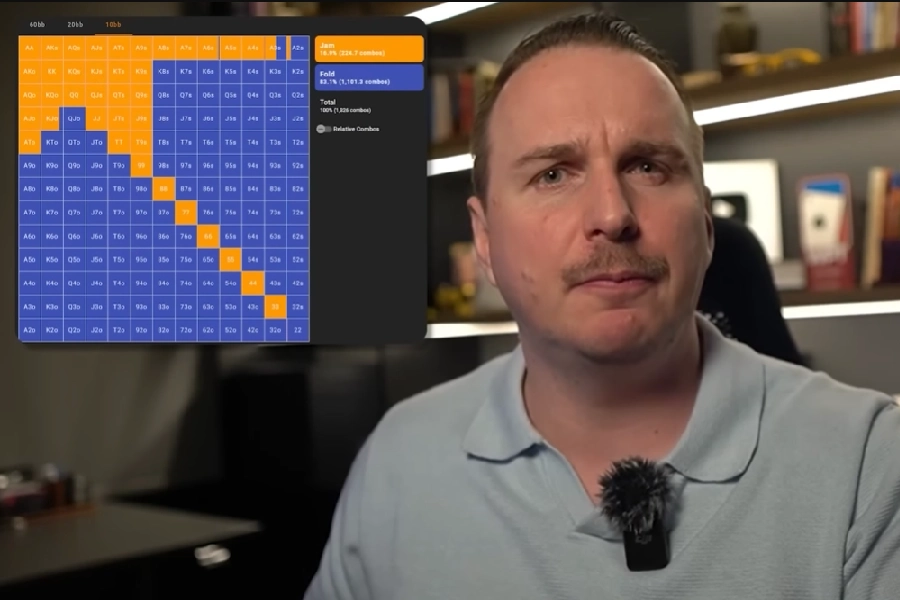
“Exploits are very easy to learn. You will start growing a certain feeling for certain spots.
If you realize every time I three-bet, those guys fold, hit the range viewer, watch my videos, and see what your opponents are supposed to call versus a three-bet from the button versus the big blind. And then you realize: wait, they’re supposed to be calling with King-10 offsuit or weak offsuit aces, especially at a critical stage of a tournament, and you’re playing against other regulars.
So then add more pressure, start three-betting more hands. That’s how you introduce exploits to your game.“
He believes growth in poker is rarely linear.
“You might go to $10, go back to $5, start playing six tables, go back to three tables. It’s normal.”
The players who last are adaptable. Ego is usually the first thing that has to go.
“If you’re not able to do that because you can’t manage your ego, there’s zero chance.”
#7 – The Best Players Do Not Improve Alone
Poker becomes isolating very quickly, especially during downswings.
Ben believes community accelerates growth and removes limiting beliefs.
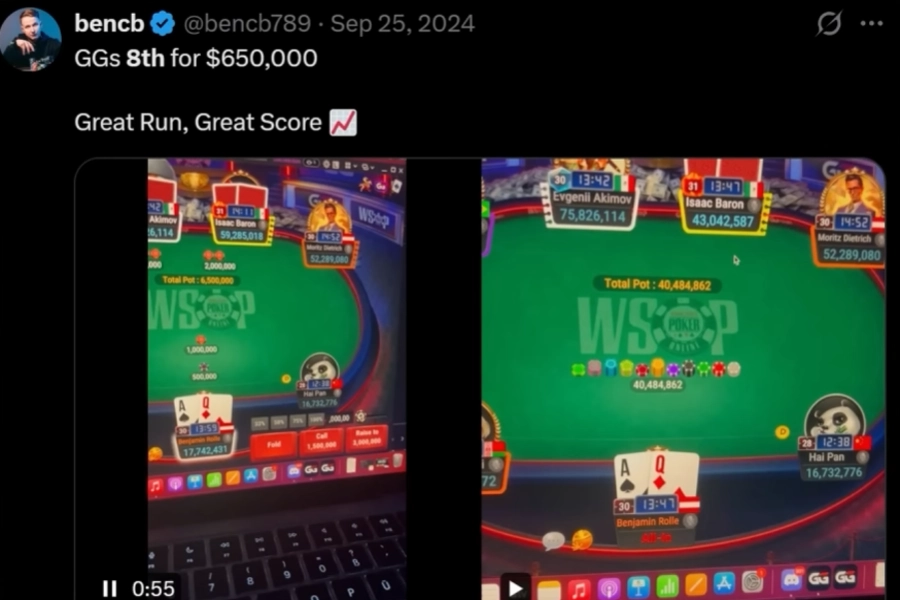
“I’m too shy.”
“That’s an excuse, a limiting belief. Jump in cold water. You’re afraid. You will be laughed at. Yeah, it’s the internet. Who cares?
And then you want to become a poker millionaire, going through a ton of downswings and being beaten by variance, but you can’t even talk to people on the internet.
Not going to happen. You don’t need therapy or to read another book. Just do things.“
The value goes beyond strategy discussion.
“Confidence comes from real-life experiences.
The wins, even losses that you draw meaning from, grow real confidence from within.”
Progress accelerates when players stop trying to solve everything alone.
#8 – ICM and Self-Awareness Separate Serious Players
Tournament poker changes dramatically once payouts become relevant.
Many players understand chip EV. Far fewer understand dollar EV.
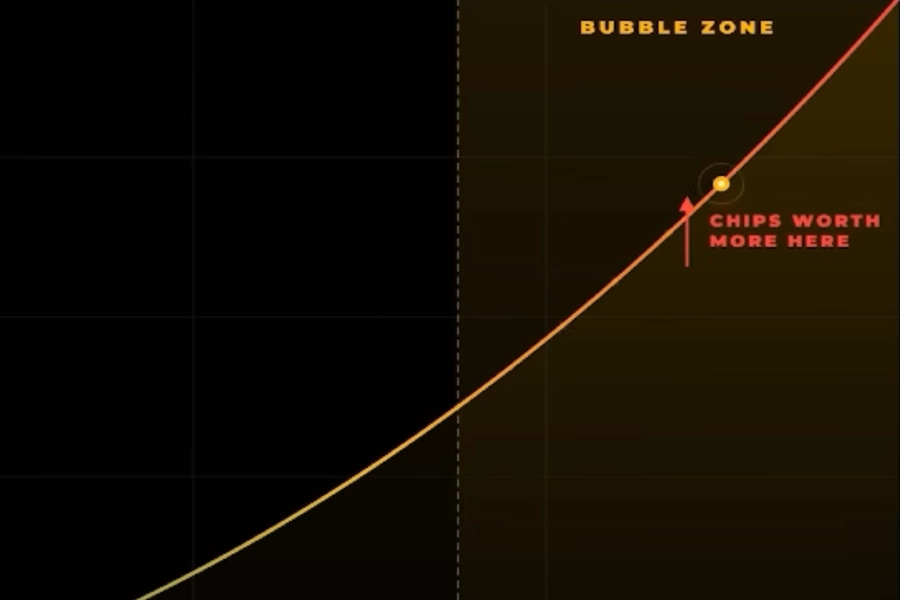
“ICM means that tournament chips are not worth real money in a linear way.
Losing chips hurts more than winning the same amount helps.”
One decision can be profitable in chips while still losing money in tournament equity.
“Even if the all-in call is plus chip-EV, it can be minus dollar-EV.”
For Bencb, the deeper lesson is self-awareness.
“If you end up calling too much on the river, you might have a slight gambling issue.
You’re favoring curiosity over profitability, which is gambling.”
Poker rewards honesty more than intelligence. Most players already know their leaks. The hard part is fixing them.
#9 – Only Invest When You’re Serious
Ben repeatedly emphasizes that most players do not need expensive tools early on.
With solid fundamentals and enough volume, players can beat low stakes using mostly free resources.
“With what I provide, the free course, the free mindset course, and the free quiz, you can totally win at micro and low stakes and build a $10,000 bankroll.
Only if you’re 100% certain that you want to invest into something, then go for it.
It’s not only a money investment, but also time.”
For most beginners, execution matters far more than expensive software.
#10 – ICM and Self-Awareness Separate Serious Players
When players lose confidence, Bencb believes they should revisit the basics instead of chasing advanced theory.
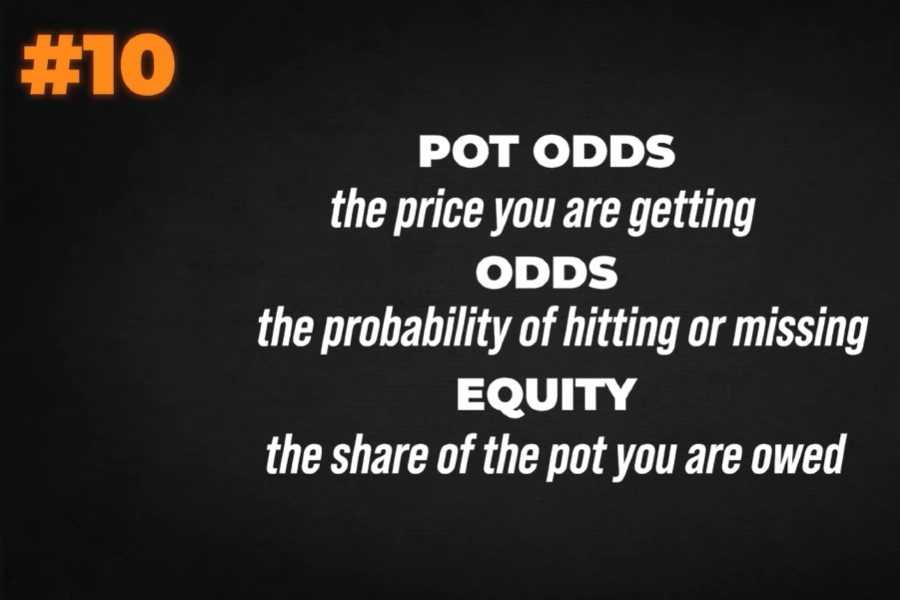
“If you end up in pots where you don’t feel confident playing your draws, go back to the beginning.
Pot odds, odds, and expected value.”
For him, the deeper challenge is rarely knowledge. It is self-awareness.
“If you end up calling too much on the river, you might have a slight gambling issue.
You’re favoring curiosity over profitability, which is gambling.”
Bencb believes most players already know their mistakes while they are making them.
“A smoker knows that smoking is terrible but continues to do so.”
Poker rewards honesty more than intelligence. The hard part is fixing the habits you already recognize.
Catch the rest of Bencb’s legendary poker advice on the Raise Your Edge YouTube channel, where you’ll find a catalogue going back over 8 years.
Here’s another one tournament players will love for quick improvements:
Join Our Thriving Community
CoinPoker offers an unmatched online poker experience: instant crypto transactions, fair gaming, and no verification requirements.
Join to collect a share of over $7M every month from CoinRewards.
Play Now