














Last Updated: 7 July 2026
Omaha Hi-Lo Poker: Rules, Gameplay & Strategy Guide
Learn how to play Omaha Hi-Lo Poker: the Eight-or-Better game where high and low hands matter equally. Master rules, gameplay, and strategy in this detailed guide.
GuidesOmaha Hi-Lo, also called Omaha 8-or-Better, is one of the most rewarding split-pot poker variants. Each hand has the potential to win the high pot, the low pot, or both, giving players multiple ways to collect chips and opportunities to scoop the entire pot.
In this guide, we’ll uncover Omaha Hi-Lo rules, hand rankings for both high and low, gameplay flow, and the all-important O8 strategies. Plus, you’ll learn how scoops, splits, and quartering work in this action-packed poker variant.
What is the Omaha Hi Lo Poker Game?
Omaha Hi-Lo is a poker variant where you aim to make the best high hand and the best low hand from your hole cards and the community cards. Is it part of the Omaha poker family of games, where you must use exactly two hole cards along with three community cards to create a high and low hand.
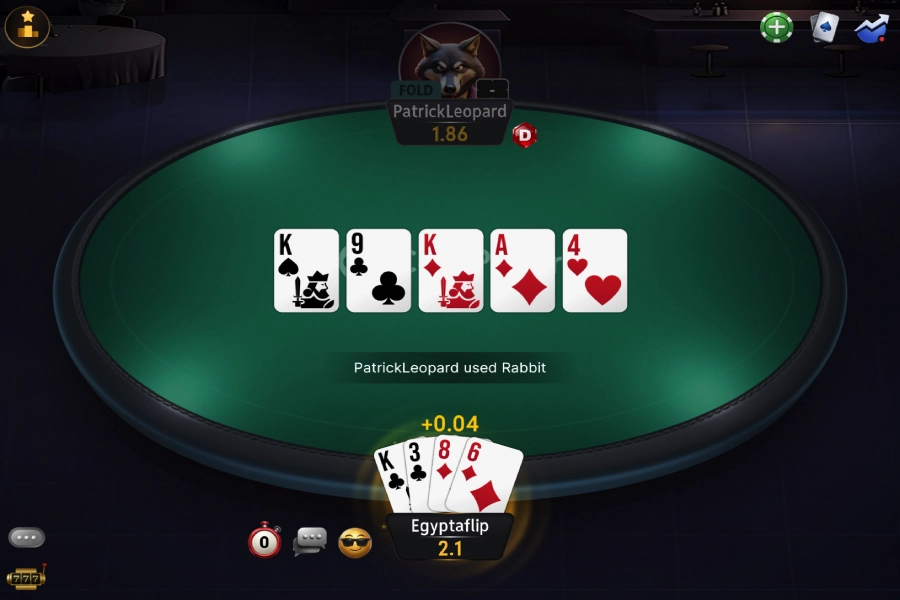
The pot is split between the best high hand and the lowest qualifying low hand, which must contain card values of 8 or lower. There are more important rules to keep in mind for your next Omaha Hi-Lo session, though.
Omaha Hi-Lo Rules: 8-or-Better Explained
Omaha Hi-Lo follows the same basic rules of Pot Limit Omaha, but with an added low-hand qualification. The game follows standard Pot-Limit betting rules in most cases, although the lesser common Limit and No-Limit formats can be found.
Each player receives four hole cards and must try to create a high and/or low hand using those, plus exactly three community cards. You can use any combination of two cards from your four, whether those two cards share both or one rank. For example, if you have 8‑8‑A‑2 and the board shows 8‑3‑4‑5‑K, you hold trip 8 for the high hand and 5-4-3-2-A for the low.
High hands are straightforward and follow the traditional poker hand rankings. Straights and flushes do not qualify for the low half of the pot; you must make a hand of unique ranks, all valued 8 or lower.
If no one can make a qualifying low hand, the entire pot is awarded to the best high hand. When both high and low qualify, the pot is split evenly unless players tie or share portions of one side.
High hands are evaluated exactly as in standard Omaha and Texas Holdem, using the normal poker hand ranking list from high card up through royal flush. However, aces count for both the high and low hands. If you are familiar with standard poker variations, then evaluating the high card rankings will come naturally to you.
A qualifying low hand in Omaha Hi-Lo must contain five different card ranks, all valued eight or lower, which is why the game is called 8-or-better. Aces always count as low for this purpose, making 5-4-3-2-A the best possible low, often referred to as the wheel.
Straights and flushes do not affect the strength of the low. Only the individual card ranks matter. Any repeated rank, such as a pair or trips, doesn’t qualify for a low.
Low hands are compared starting with the highest card and moving down. You can think of each low in a five-digit format. For example, A-2-3-4-5 is read as 5-4-3-2-A, and A-2-3-4-6 is read as 6-4-3-2-A. The hand with the lowest highest card wins, and if those are equal, the next highest card is compared, and so on.
You must use exactly two of your four hole cards along with three community cards to make a low hand. Because of this, some lows that seem possible at first glance may not actually qualify once the combinations are checked.
Quick examples of low qualification:
- 5-4-3-2-A is the wheel and the best low hand
- 6-4-3-2-A is the next best low
- 8-7-6-5-4 is the weakest qualifying low hand
- 8-7-4-3-A qualifies but is a weak low hand
- 9-8-3-2-A does not qualify because of the 9
- 8-8-3-2-A does not qualify because it contains a pair
How to Play Omaha Hi-Lo: Gameplay Steps
Each hand begins with the small blind and big blind placed on the table. The action starts to the left of the big blind, and is typically in the pot-limit betting format. Here’s how a game plays out:
- Deal: Once the small blind and big blind are posted. Each player is dealt four private hole cards.
- Preflop: Action begins to the left of the big blind. Players can fold, call, or raise.
- Flop: The dealer places three community cards on the board. A round of betting follows, starting with the player closest to the left of the dealer button.
- Turn and River: The fourth community card (Turn) is dealt, and another betting round takes place. Players then move on to the fifth and final card (River) for one last round of betting.
Following the river betting, remaining players move to the showdown, where the winners are evaluated.
Omaha Hi-Lo Showdown: High, Low, and Scoops
At showdown, each remaining player reveals their cards for both their high and low hands. This is when the pot is chopped up, or when you can scoop the entire thing. Here’s exactly how it works:
The most straightforward part of the showdown is the high hand evaluation. Two hole cards with three board cards make a five-card high hand. If two or more players show the same high hand, that portion of the pot is split evenly between them.
If the board is heavy with high cards, no low hand will qualify. So, what happens? Simply, the entire pot is awarded to the best high hand. A no-low-hand situation is relatively common and occurs around 40% of the time in 8-or-Better. This probability changes with table size: in a full ring of nine players, it is slightly higher because more high cards are likely in play, while in a six-handed game, the chance decreases as fewer players contribute to the board texture.
When you’re evaluating a low hand, it’s important to remember that only cards valued 8 or lower will count. As usual in Omaha, you must use two from your hole cards and three from the board. “The wheel” of A-2-3-4-5 is the best low hand. It’s also a straight, falling into the high hand category. Hands like a pair, two pair, or trips are counted as high hands only.
In Omaha Hi-Lo, the pot can be divided in several different ways, depending on the hands. Here’s how each works:
Scooping
One player takes both the high and the low, claiming the entire pot. This happens when someone has the strongest high hand and the best qualifying low.
Example: A player has A-2-K-5, and the board shows 3-4-5-A-A. They make a full house for high and A-2-3-4-5 for low, winning the entire pot.
Splitting
The high and low are won by different players, so the pot is divided in half between them.
Example: You hold K-Q-J-9, another player holds A-3-4-6, and the board shows 2-3-K-5-K. You make trip kings for high. Your opponent makes A-2-3-4-5 for the low. You both split the pot and win half each.
Quartering
Sometimes, two players tie for the low score while a third player wins the high score. In this case, the tied low players each receive a quarter of the total pot, which can result in a small gain or even a net loss for them. The opposite can also happen if two players tie for the high hand while another player wins the low hand.
Example: At showdown, you have A-2-3-4-6, an opponent also has A-2-3-4-6, and another has K-K-Q-Q-A. Two pair, kings and queens, win the high half of the pot. Meanwhile, you split the low half and win a quarter of the total pot.
Omaha Hi-Lo Starting Hands
Choosing the right starting hand range is critical because each hand can compete for both the high and low pots. Unlike Texas Holdem, you get four hole cards, and you must use exactly two of them with three board cards to make each hand.
Premium Wheels and Strong Starting Hands
The strongest starting hands in Omaha Hi-Lo are “connected wheels” like A-2-3-X, A-2-4-5, and A-3-4-5. These hands give you the best chance to scoop both the high and low pots. Double-suited versions are especially valuable, offering extra flush possibilities and more ways to improve your hand as the board develops.
Suited Aces and Backup Low Potential
Hands containing suited aces, such as A-2-x-x or A-3-x-x, are highly prized. They provide nut-low potential while keeping options for a strong high hand. “Backup lows” are secondary low draws that can still qualify if the nut low is blocked by other players, giving you more ways to claim at least half of the pot.
High-Only and Low-Only Traps
Not all hands that look strong are equally versatile. High-only traps are hands with good high potential but little chance for low, while low-only traps may have low potential but weak high possibilities. Being aware of these helps you understand when a hand can realistically compete for both sides or just one side of the pot.
Omaha Hi-Lo Strategy
Omaha Hi-Lo differs from regular PLO strategy due to split pots, multiple ways to win, and different starting hand selection. Understanding how to balance high and low potential, protect your draws, and manage betting in multiway pots is essential for consistent success in this variant. Here are the best Omaha Hi-Lo strategies to use in your next session.
Some hands are strong for high only or low only, while others can compete for both. “Playing one way” focuses on maximizing potential on one side of the pot, often in tight spots. “Going both ways” uses hands like A-2-3-X that can scoop, increasing your chance to win the entire pot when conditions are favorable. When the board is coordinated and likely to make a low, play hands that can go both ways to try and scoop. If the board is mostly high cards, focus on your strongest side and play one way to avoid splitting the pot.
Hands with nut-low potential are the most valuable in Omaha Hi-Lo, as winning the low side is required to scoop the pot. Non-nut-lows can still be playable but are riskier, as they often lose to stronger lows. Recognizing the difference and adjusting your betting accordingly prevents overcommitting with weak low draws.
Low hands can be “counterfeited” when a community card duplicates a card in your hand, reducing the strength of your low. For example, holding A-2-3-X with a 2 on the board can weaken your low. Redraws allow you to reevaluate your hand with your hole cards, giving you a chance to improve if the board changes. In this example, if the turn and river bring a 4 and a 5 fitting with your other cards, your low hand strengthens to the nut-low, leaving you in a strong position.
Freerolling occurs when you can win half the pot without risking your share of the other half, such as when holding the nut low while an opponent’s high is weak. Identifying these spots enables you to make informed bets or raises while maximizing potential gains from multi-way pots.
Omaha Hi-Lo is often played in multiway pots, where equity is divided among several players. Understanding your hand’s relative strength and how it interacts with multiple opponents is key. Nut lows, strong high draws, and board connectivity all affect equity, so careful evaluation before committing chips is crucial.
Being in position allows you to see opponents’ actions before making decisions, giving a significant advantage in both betting and hand evaluation. In pot-limit formats, the maximum bet is limited to the current pot, which changes the risk-reward calculation and affects how you manage draws, scoops, and potential overcalls.
Common Mistakes when Playing Omaha Hi-Lo
Avoiding common errors helps protect your chips, maximize your chances of scooping, and prevent being outdrawn by multiple opponents. Here are some pitfalls to watch for:
- Overvaluing High-Only Hands: Focusing solely on high potential can cost you the low half of the pot. In Omaha Hi-Lo, even strong high hands may only win half the pot if you miss the low.
- Chasing Non-Nut Lows: Playing weak low draws can lead to losing both high and low. Nut-low potential is key to winning consistently, especially in multiway pots.
- Ignoring Board Texture: Failing to account for the board’s impact on both high and low hands can lead to getting counterfeited or outdrawn unexpectedly.
- Underestimating Multiway Equity: Failing to consider how your hand interacts with multiple opponents can lead to overcommitting chips.
- Neglecting Position: Acting out of position makes it harder to control the pot size and read opponents, reducing your ability to scoop or protect hands effectively.
- Overcommitting Without Scooping Potential: Even strong hands should be evaluated for both high and low potential. Betting heavily with only one side exposed can result in losing half or all of the pot.
Play Omaha Anytime at CoinPoker
The niche game of Omaha Hi-Lo is a fun and challenging variant of poker. While we may not have it yet on CoinPoker, we host 24-hour cash games and tournaments for both Pot-Limit Omaha and 5-Card Pot-Limit Omaha. There’s always a table waiting for you to join and compete against players on any device. Register at CoinPoker now and claim a 150% first deposit bonus up to $2,000.
Other Poker Games on CoinPoker
CoinPoker boasts a variety of poker games, giving you plenty of options to test your skills and enjoy different formats. Here are three popular choices:
- 3 Card Poker: A fast-paced poker variant where players compete against the dealer with three-card hands. Simple rules and quick rounds await in 3-Card Poker.
- Video Poker: A digital twist on the traditional game. Video Poker combines slots-style gameplay with strategic decision-making.
- No Limit Texas Holdem: The classic poker game that needs no introduction. Play Texas Holdem cash games or tournaments, and compete using skill, strategy, and psychology to win big pots.
FAQs
What is Omaha Hi-Lo?
Omaha Hi-Lo, also called Omaha 8-or-Better or PLO8, is a split-pot variant where players compete for both the high and low halves of the pot.
How does the low hand qualify?
A low hand must have five different cards ranked 8 or lower, with aces counting as low. Straights and flushes are ignored for low evaluation.
What are the best starting hands?
Premium starting hands include connected wheels like A-2-3-X, A-2-4-5, and A-3-4-5, preferably double-suited, giving strong potential for both high and low pots.
What does scooping mean?
Scooping happens when a single player wins both the high and low halves of the pot in the same hand.
What is PLO8?
PLO8 is short for Pot-Limit Omaha Hi-Lo, referring to Omaha Hi-Lo played with pot-limit betting rules.
Is Omaha Hi-Lo good for beginners?
It can be challenging due to the split-pot element, but learning the basics and starting hands makes it accessible and highly rewarding.
How does quartering work?
Quartering occurs when two players tie for the low while another player wins the high. Each tied low hand receives a quarter of the total pot.