













Last Updated: 6 September 2026
How Many Decks of Cards Are Used for Poker Games? Full Guide
Learn how many decks of cards are used for poker games, including online, live games, and even games with different numbers of players.
Guides
You’re minutes away from hosting friends for poker night. Chips are stacked, snacks are ready, drinks are on ice… and then you notice there’s only one old deck sitting on the table. Is that really enough?
In this guide, we’ll answer all your questions about how many decks of cards you need for home games, casino card rooms, and other poker events.
How Many Decks of Cards for Poker?
New players sometimes wonder how many decks of cards are used in poker games.
A standard poker game uses one 52-card deck, regardless of format or number of players. Casinos might keep two decks at each table, but only one deck is ever in play during a hand. While one deck gets dealt, the other sits in an automatic shuffler getting mixed for the next round, cutting down on wait times between hands.
How many decks of cards for poker games with up to 8 players? The answer is, just one!
Take a look at the basic rules of poker and you’ll see that a single 52-card deck can handle up to 10 players in most formats. A single 52-card deck can accommodate up to 10 players in Texas Hold’em, while variants that deal more hole cards may support fewer players.
These popular poker games all use a single deck:
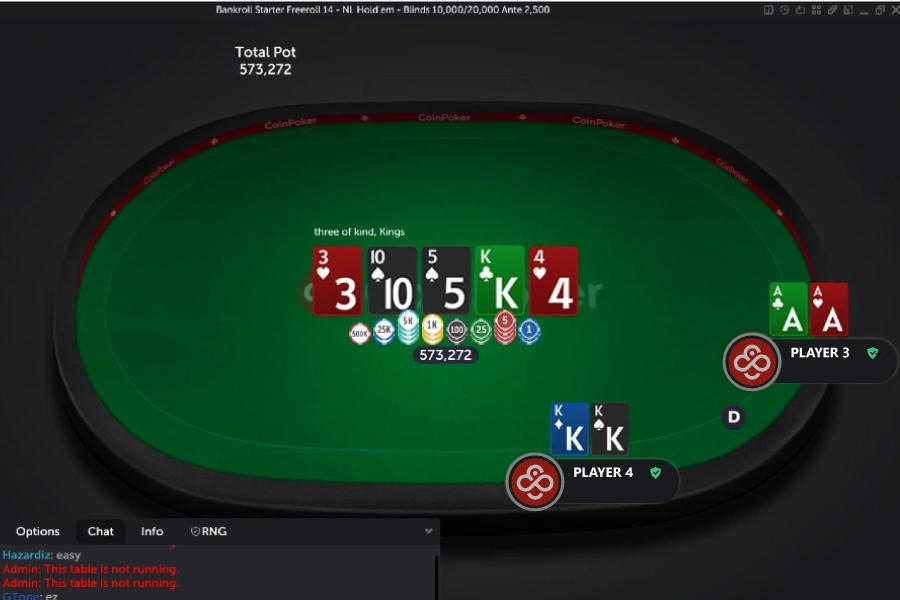
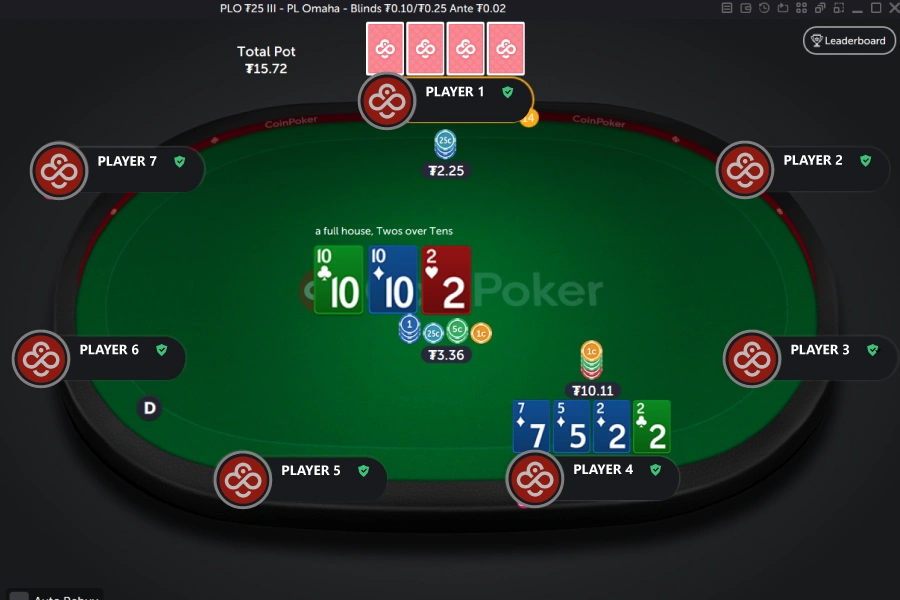
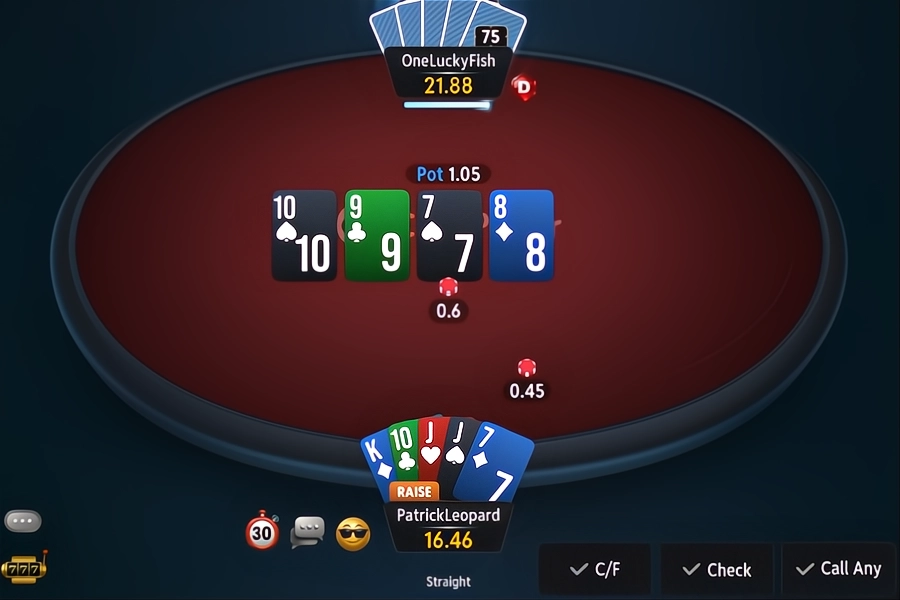
How Many Decks for Poker at a Casino?
So, how many decks of cards for poker at a casino? Casinos keep two decks at each table, but only one deck is ever in play.
While one gets dealt, the other sits in the automatic shuffler, cutting wait times between hands. Other casino games are a little bit different; blackjack typically uses 6-8 decks mixed together.
How Many Decks for Texas Hold’em Poker at Home?
Playing with friends and wondering how many decks of cards for Texas Hold’em poker you need at home? One deck of 52 cards is all you need.
Some hosts might shuffle a second deck during play to speed up play, but home games are casual and that’s honestly overkill. Check out our home poker setup guide for everything you need to get started.
How Many Decks for Online Poker?
Let’s talk about digital games for a moment. How many decks does online poker use?
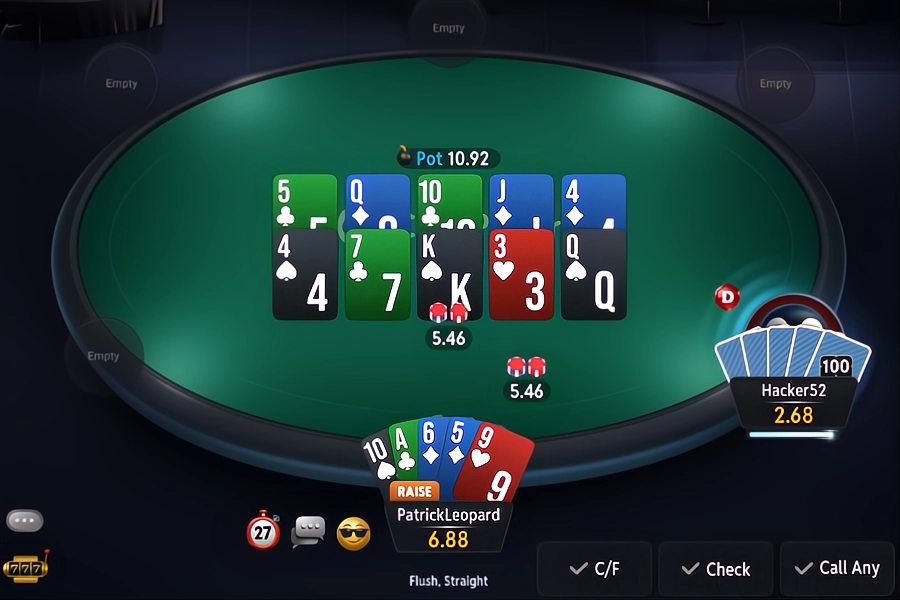
Technically, online poker still uses only one deck, but the deck gets virtually shuffled fresh for every hand, so you don’t have to worry about marked cards or human error.
At CoinPoker, you can actually know that every shuffle is fair through our tested RNG shuffling system, something that is impossible to do with physical cards.
Can You Play Poker with 2 Decks of Cards?
Technically, you could mix together a ‘double deck’ in a private home game, but it’s a bad idea. For one, the math and poker odds become meaningless–imagine two players with identical flushes or full houses, or someone making five-of-a-kind!
Cheating becomes super easy, too. In a regular 52-card game, if someone sneaks an extra Ace of Spades into their hand, for example, it’s extremely obvious. With two decks you might not even notice! Every hand turns into an argument.
Save yourself the headache and stick to one deck.
Do All Poker Games Use a 52-Card Deck?
Most popular poker formats, including Texas Hold’em and Pot Limit Omaha, use one standard 52-card deck. However, there are exceptions.
Short Deck poker, also known as 6+ Hold’em, uses a 36-card deck. All 2s, 3s, 4s, and 5s are removed, leaving only cards ranked 6 through Ace.
The smaller deck changes the probabilities of making certain hands and can also affect hand rankings, making Short Deck play differently from traditional Texas Hold’em.
Learn How to Use a Deck of Cards in Poker
Ok, so now you know that poker only uses one deck. Next, you need to understand how those 52 cards actually work.
Card rankings determine hand strength, suits matter in certain situations, and knowing how your cards combine into winning hands is key. We’ll cover all three in the next sections.
How the Cards Rank in a Deck of Cards
In poker, cards rank from 2 (the lowest) to Ace (the highest). The full order is: 2, 3, 4, 5, 6, 7, 8, 9, 10, Jack, Queen, King, Ace. Remember: bigger numbers beat smaller numbers, ‘face’ cards (Jack, Queen, King) beat all numbered cards, and the Ace beats them all.
The Ace, though, is flexible. It can play as either the high or low card in a straight. An Ace can make the highest possible straight A♠K♥Q♦J♠10♣ (Broadway) or the lowest possible straight 5♣4♥3♦2♣A♣ (The Wheel). You can’t use an Ace to wrap around from high to low, though, so a hand like Q♠K♣A♠2♥3♣ isn’t a valid straight. This double duty is exactly why the Ace has the top spot in our poker hand rankings.
What the Suits Mean in a Deck of Cards
A standard 52-card deck contains four suits: Spades (♠), Hearts (♥), Diamonds (♦), and Clubs (♣). Each suit contains 13 cards, from 2 through Ace.
In most poker variants, no suit ranks higher than another. For example, an Ace-high Flush in Hearts has the same hand-ranking value as an otherwise identical Ace-high Flush in Spades.
When two players make the same type of hand, the winner is normally determined by the ranks of the cards rather than the suit.
How Decks of Cards Make Poker Hands
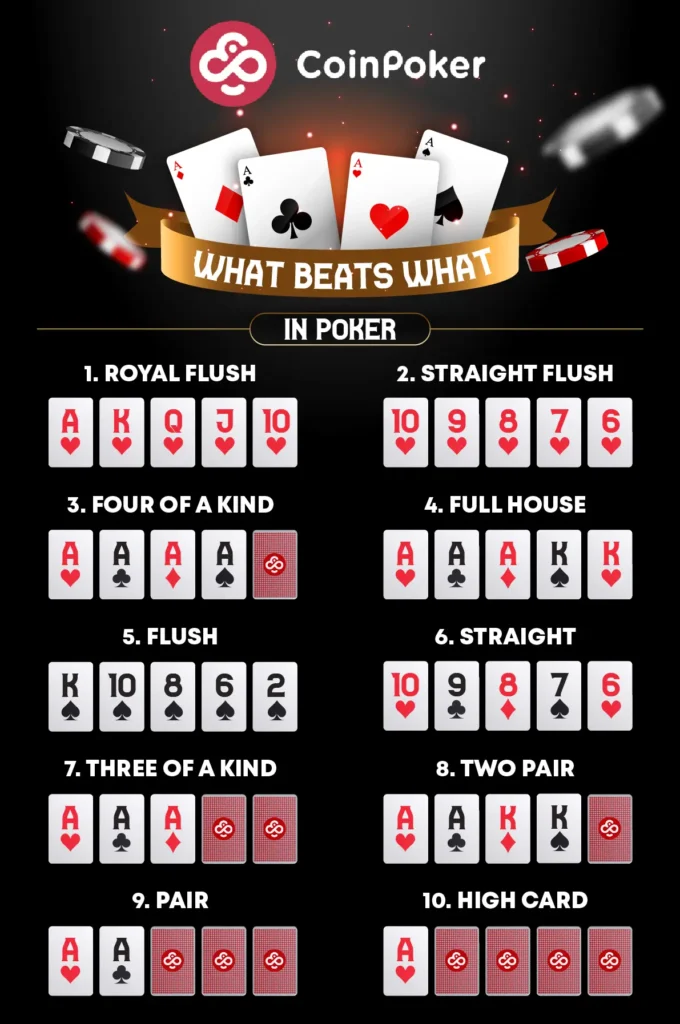
Poker hands are five-card combinations ranked by rarity. The harder a hand is to make, the stronger it ranks.
Here are all the possible poker hand rankings from weakest to strongest:
- High Card [A♠ K♦ 8♣ 5♥ 2♠]: No matching cards
- One Pair [K♠ K♦ 9♣ 6♥ 3♠]: Two matching cards
- Two Pair [Q♠ Q♦ 7♣ 7♥ 4♠]: Two different pairs
- Three of a Kind [8♠ 8♦ 8♣ J♥ 5♠]: Three matching cards
- Straight [9♠ 8♦ 7♣ 6♥ 5♠]: Five consecutive cards
- Flush [A♠ J♠ 8♠ 5♠ 2♠]: Five cards all same suit
- Full House [K♠ K♦ K♣ 3♥ 3♠]: Three of a kind plus pair
- Four of a Kind [7♠ 7♦ 7♣ 7♥ K♠]: Four matching cards
- Straight Flush [Q♦ J♦ 10♦ 9♦ 8♦]: Straight all same suit
- Royal Flush [A♠ K♠ Q♠ J♠ 10♠]: A-K-Q-J-10 same suit
Since you’ll always know what’s in the deck, you can calculate poker odds for making these hands. Understanding how many cards remain unseen can help you calculate probabilities and make more informed poker decisions.
What Decks of Cards Are Best for Poker?
When buying cards to play poker, the material matters more than any flashy design. Casino-grade decks use 100% plastic in order to handle thousands of hands (and players) without bending, marking up, wearing out, or being ruined by spilled drinks. For casual games, paper cards with plastic coating are fine, but they’ll likely start showing scratches or marks after a few late-night sessions.
If you want to get serious about your home poker games, here are five quality brands:
- Copag: Brazilian-made 100% PVC, used at WSOP tables. Ultra-smooth shuffle feel; approx $8-$12 per deck
- KEM: Premium cellulose acetate plastic, design hides wear; around $25-$35 per set
- Bicycle: America’s standard paper cards with plastic coating, perfect for casual games, typically $5 per deck
- Modiano: Italian platinum acetate ‘casino-style’ plastic, $20-25 per set
- Fournier: Spanish plastic used in European poker rooms, great snap and flexibility, $15-20 per set
You can find Bicycle cards at any grocery store, dollar store, or convenience store. For plastic cards, hit up specialty online gaming shops or online retailers.
Take Your Poker Skills Even Further
Now you know how many decks of cards you need to play poker, how the cards rank, and what makes winning hands. Understanding these basics already puts you ahead of all the clueless players. The real pros study for hours daily to stay sharp—are you ready to take your game to the next level?
CoinPoker offers games starting from $0.01/$0.02, perfect for learning without breaking the bank. With thousands of players online 24/7, you’ll always find games to play.
Sign up today and use what you’ve learned!
FAQs
For standard poker variants, you only need one 52 card deck.
One 52 card deck is enough for an eight player game of Texas Hold’em and other standard poker variants. Formats that use more hole cards, such as PLO6, require fewer players to play with a single deck.
Texas Hold’em always uses one standard 52 card deck, whether the game is heads-up, a full ring game, or any number in between.
Although it’s possible, standard poker is not designed for two decks mixed together. Duplicate cards completely change the odds and create situations that cannot occur in a normal game.
Poker runs require multiple decks because every participant collects cards at several checkpoints. The exact number depends on how many people take part and how many cards each person receives.
No. Short Deck poker uses 36 cards instead of the standard 52. The 2s, 3s, 4s, and 5s are removed from each suit, leaving cards from 6 through Ace.
This changes the probability of making different poker hands, which is why Short Deck has different strategy considerations and may use different hand-ranking rules from standard Texas Hold’em.